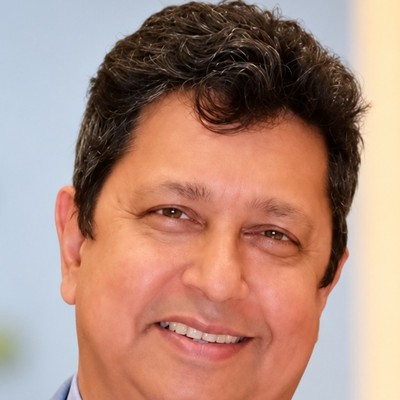
Frequently Asked Questions
Everything Grows in Chino. Let's Make Quality of Life Grow With It.
Chino 2045 — From Growth to Greatness
Plan it well. Fund it well. Build it well. Maintain it well. Measure the results.
This master FAQ combines the campaign's core priorities with resident-centered questions on youth, seniors, accessibility, families, customer service, and community support. Comparisons with other cities are presented as examples to evaluate, not as commitments to copy specific programs.
About & Approach
Q1–61.Why are you running for Chino City Council?
I am running because Chino continues to grow, and decisions made today will affect our neighborhoods and quality of life for many years.
I want to bring my experience in public service, engineering, project management, education, and community involvement to City decision-making, with a focus on responsible growth, infrastructure, public safety, fiscal responsibility, and measurable results.
My goal is to help Chino capture the benefits of growth, manage its impacts, and raise our standard of quality of life.
2.What experience, skills, and leadership would you bring to the Chino City Council?
I bring more than 25 years of California state government service, along with experience as a Professional Civil Engineer, Caltrans Project Manager, UCLA PhD candidate in Transportation Engineering, and CSU Long Beach lecturer.
Policy, priorities and decision-making: My public-service career requires evaluating complex issues, alternatives, regulations, risks, competing priorities, and impacts on communities.
Budget, funding and accountability: As a Caltrans Project Manager, I work with scope, cost, funding, schedules, risks, milestones, resources, and project delivery.
Major infrastructure: I have worked on Southern California transportation projects involving I-405, SR-55, SR-241, SR-57, Pacific Coast Highway, and multi-asset projects.
Intergovernmental coordination: My work has involved cities and local, regional, state, and federal partners, including Los Angeles County, SCAG, LA Metro, LADOT, and other governmental and transportation partners.
Pacific Coast Highway and Malibu: I currently work on Pacific Coast Highway projects involving the City of Malibu, including project coordination and community engagement.
Public engagement: In September 2026, I participated with the Caltrans team in a public engagement meeting for a Pacific Coast Highway project, presenting project information and participating in questions and answers with residents, media, City representatives, and Council Members.
Leadership and multidisciplinary collaboration: My work requires bringing together engineering, design, traffic operations, environmental, construction, maintenance, planning, right-of-way, utilities, consultants, management, agencies, and other stakeholders.
Education and long-range thinking: My doctoral studies and university teaching add research, data analysis, education, and long-range planning to my practical public-sector experience.
Policy · Budget · Infrastructure · Public Engagement · Collaboration · Intergovernmental Coordination · Oversight · Accountability
Public Service · Engineering · Project Management · Major Infrastructure · Budget & Schedule · Community Engagement · Interagency Coordination · Research · Teaching · Leadership
Plan it well. Fund it well. Build it well. Maintain it well. Measure the results.
3.What does a Chino City Council Member actually do?
The City Council is Chino's legislative branch. It consists of the Mayor and four Council Members. The Mayor is elected at large, and Council Members are elected by geographic districts for four-year terms. The Council appoints the City Manager and City Attorney; department directors are appointed by the City Manager.
A Council Member participates in establishing policy and priorities, considering budgets and public investments, reviewing matters brought before the Council, representing residents, and providing policy-level oversight. The City Manager oversees City departments and carries out Council policy and direction.
Source: City of Chino, City Council; City Manager's Office.
4.How would you approach Chino's challenges?
My approach would be to clearly identify the problem, review evidence and alternatives, listen to residents and professional staff, establish priorities, determine funding, monitor implementation, and measure results.
Effective City government also requires collaboration among residents, Council Members, City staff, businesses, schools, regional agencies, and state and federal partners.
Plan → Fund → Build → Maintain → Measure
5.What are your main priorities?
My seven focus areas are: Traffic & Mobility · Infrastructure · Public Safety · Parks & Community Services · Education & Workforce · Jobs & Economic Development · Fiscal Sustainability
These issues are interconnected. Growth affects transportation, infrastructure, public safety, parks, staffing, businesses, and City finances.
6.What is “Chino 2045 — From Growth to Greatness”?
Chino 2045 is my framework for looking beyond individual projects and considering where Chino is heading over the long term.
A Council term is four years, so my immediate focus would be 2026–2030: identifying realistic priorities and measurable progress during those four years while keeping Chino's longer-term future in view.
Plan → Fund → Build → Maintain → Measure
Priorities & Growth
Q7–117.What would you focus on regarding traffic and mobility?
I would emphasize measurable information: traffic volumes, congestion, intersection performance, collision history, development forecasts, project schedules, and funding.
Depending on the problem and professional analysis, potential improvements could include roadway and intersection projects, traffic-signal coordination, pedestrian and bicycle facilities, multimodal transportation, and coordination with regional and state transportation agencies.
My transportation background would help me ask informed questions while relying on City professionals and appropriate technical analysis.
8.How would you approach public safety?
I would look at public safety comprehensively, including staffing, workload, service demands, response needs, traffic safety, training, technology, employee retention, and population growth.
I would support evaluating requests for additional resources based on demonstrated needs, professional recommendations, available funding, and measurable service outcomes.
9.How would you approach continued development and growth?
For significant development decisions, I would consistently ask: What infrastructure is required? Who pays for it? When will it be delivered? What additional City services will be needed? What will be the impact on existing neighborhoods?
Growth should be considered together with the infrastructure and public services necessary to support it.
10.What would you do about infrastructure?
Infrastructure includes streets, water, sewer, drainage, sidewalks, traffic signals, parks, and public facilities.
My project-management approach would be: Scope → Cost → Funding → Schedule → Progress → Results
I would focus on whether infrastructure is keeping pace with community needs, whether projects are progressing as planned, whether costs and schedules are changing, and what residents ultimately receive from those investments.
11.Where does the City get money to provide services and build projects?
City government uses multiple revenue sources and funds rather than one pool of money. Different revenues can have different restrictions and purposes.
Depending on the service or project, funding can include taxes, fees and charges, utility revenues, development-related sources, restricted funds, grants, and other governmental funding.
For major investments, I would ask: What does it cost? Where does the money come from? What restrictions apply? Is outside funding available? What will it cost to operate and maintain afterward?
Funding & Measures
Q12–1612.What is Measure V?
Chino voters approved Measure V in March 2024. It is a one-cent local sales-tax increase that took effect July 1, 2024, raising Chino's sales-tax rate from 7.75% to 8.75%. The City states that it was expected to generate up to approximately $28 million annually for essential City services and improvements.
Source: City of Chino, Measure V Report Card.
13.How is Measure V money being used?
For FY 2024–25, the City's Measure V Report Card lists approximately $25.1 million in programmed eligible expenditures: about $10.4 million for preservation of essential services and about $14.7 million for capital projects. The City notes that these figures are estimates while the final quarter is being confirmed.
Examples listed by the City include Ayala Park improvements, the Euclid Avenue Bridge project, traffic-signal synchronization, personnel retention, targeted staffing, CIP engineering, and economic development.
I support transparent reporting so residents can see where public funds are allocated and what results are being produced.
Source: City of Chino, Measure V Report Card.
14.What are Measures M, Y, V and F?
These measures address different City issues.
Measure M – 1988: According to the City, it applies to territory within Chino's boundaries as of November 8, 1988 and prohibits the Council from increasing residential density or rezoning nonresidential land for residential uses without voter approval.
Measure Y – 2022: Connected to Chino's Housing Element and rezoning strategy. City materials state that Measure Y did not eliminate or change Measure M.
Measure V – 2024: Chino's one-cent local sales-tax increase, effective July 1, 2024.
Measure F – 2026: Business License Reform & Small Business Protection Measure on Chino's November 3, 2026 ballot.
These are four measures particularly relevant to current City issues; they are not necessarily every ballot measure Chino has had historically.
Sources: City of Chino, Measure Y; Measure V Report Card; Measure F; Elections.
15.What is Measure F on the November 3, 2026 ballot?
Measure F concerns Chino's business-license tax structure.
Under the proposal, businesses with annual gross receipts of $75,000 or less would pay $25. For receipts above $75,000, rates of $0.60 to $1.50 per $1,000 would apply depending on business category, in addition to the $25 covering the first $75,000.
The City estimates approximately $4.8 million annually. The voter-approved rates would be maximums: the Council could lower them but could not increase them above those maximums without returning to voters. Chino voters decide the measure on November 3, 2026; if approved, the new structure becomes operative January 1, 2027.
Source: City of Chino, Measure F. This FAQ describes the measure and does not recommend a vote.
16.What is your approach to fiscal responsibility?
Fiscal responsibility means more than asking whether money was budgeted and spent.
I would ask: What problem are we solving? What will it cost? Where is the funding coming from? What is the schedule? Are costs or schedules changing? What was actually delivered? Did residents receive the expected result?
That reflects the same scope, cost, schedule, funding, accountability, and results approach I use in public project management.
Results & Opportunity
Q17–1917.What can a City Council Member do about education and workforce development?
The City can collaborate with schools, colleges, businesses, workforce organizations, and community groups.
I would support partnerships that connect residents and young people with internships, career pathways, workforce preparation, technical skills, and employment opportunities.
The goal is to strengthen connections among education, workforce development, employers, and opportunities within the community.
18.How would you approach businesses and local jobs?
I would focus on a responsive business environment, understandable City processes, business retention and attraction, and opportunities for quality employment.
For significant economic-development decisions, I would ask: What types of jobs are being created? What are the fiscal benefits to Chino? What infrastructure will be required? What are the impacts on surrounding neighborhoods? What is the long-term benefit to the community?
Economic development should be considered together with infrastructure, workforce development, fiscal sustainability, and residents' quality of life.
19.How will residents know whether progress is actually being made?
I believe government should measure and report results.
Residents should be able to see understandable information about major projects, budgets, schedules, expenditures, infrastructure, public services, and progress toward established priorities.
At the beginning of a four-year term, we should understand where we are. During the term, we should measure progress. At the end, residents should be able to compare what was planned with what was actually delivered.
Measure. Report. Improve. Every Year.
Plan it well. Fund it well. Build it well. Maintain it well. Measure the results.
Community & Services
Q20–2520.As a young person in Chino, what opportunities would you work to expand?
Chino already provides programs and services across stages of life, including after-school care, recreation, sports and teen programming. I would build on what is working and regularly ask whether programs reflect what today's young people need.
I would support evaluating opportunities for internships, career exploration, leadership and volunteer programs, technology and innovation activities, sports and recreation, arts and culture, and partnerships with schools, colleges, businesses, and public agencies.
Other cities offer ideas worth evaluating. Rancho Cucamonga provides dedicated youth programming, while Ontario community centers include science and technology, math and engineering, teen action committees, arts, wellness and other activities.
The starting point should be listening to young people themselves: What opportunities are missing, and what would help you become more connected to your community and future career?
Sources: City of Chino Community Services; Rancho Cucamonga Youth; City of Ontario Recreation & Community Services.
21.As a senior citizen in Chino, how would you help City services keep pace with my needs?
Chino already offers substantial senior services, including case management, S.M.A.R.T. door-to-door transportation, equipment assistance, HICAP counseling, prescription assistance, lunch programs, recreation and activities.
I would build on those programs and evaluate where services could be expanded or modernized, particularly in mobility and transportation, wellness, recreation, social connection, technology assistance, pedestrian safety, emergency preparedness, and access to information and services.
Rancho Cucamonga, for example, combines senior recreation with wellness, technology assistance, transportation options and financial assistance for eligible participants; Ontario provides senior programming, health and fitness, transportation and community-center activities.
The question should be: As Chino changes, are our senior services changing with it?
Sources: City of Chino Senior Services; Rancho Cucamonga Seniors; City of Ontario Senior Services.
22.As a resident with a disability, how would you improve accessibility and inclusion?
Chino already has an Accessibility Division, an ADA Coordinator, and an ADA Self-Evaluation and Transition Plan covering City buildings and parks, programs and policies, and pedestrian facilities in the public right-of-way.
I would support continuing that work while asking residents directly where barriers remain — in sidewalks, crossings, parks, recreation, public buildings, transportation, City programs, meetings, communications, and digital services.
Other cities also provide useful models for inclusive recreation. Rancho Cucamonga offers dedicated inclusive and adaptive programming. Irvine has disability support, social and recreational opportunities, and accessible transportation programs.
The goal should be accessibility, inclusion, independence, and meaningful participation, with accessibility considered from the beginning of planning and project development.
Sources: City of Chino Accessibility and ADA Transition Plan; Rancho Cucamonga Inclusive Programming; City of Irvine Family Services.
23.As a family living in Chino, how would you improve everyday quality of life?
Families experience City government through much more than City Hall. They experience it through parks, streets, sidewalks, recreation programs, community facilities, public safety, traffic, neighborhood conditions, and community events.
I would support regularly evaluating whether programs and facilities are keeping pace with Chino's changing neighborhoods and population.
Ontario's community-center model illustrates one approach: facilities can serve youth, teens, adults, seniors, families, recreation, fitness, arts, technology and special events in the same neighborhood setting. Rancho Cucamonga also offers financial assistance to eligible residents for certain community and library programs.
I would ask: What services are families using? What is missing? Are facilities conveniently located? Are programs affordable and accessible?
Sources: City of Chino Community Services; City of Ontario community centers; Rancho Cucamonga Community Services.
24.How would you make City services easier, faster and more convenient for residents?
Residents should not have to understand the organizational structure of City government just to get a problem resolved.
I would support evaluating a more resident-centered service model, including easier online access, clear information about which department handles an issue, convenient service requests, status tracking where practical, accessible digital services, and measurable response times.
Other cities provide examples of centralized online services for permits, payments, issue reporting, licensing and records requests. Those approaches can be evaluated for what would be useful and cost-effective in Chino.
Request → Responsible Department → Status → Resolution → Resident Feedback
Technology should not replace personal service for residents who need assistance. It should make routine interactions with government simpler.
Source example: City of Rancho Cucamonga, Everything We Do / online services.
25.How could Chino better connect residents with services when they need help?
Not every community need should become a new City-operated program.
Sometimes the City's most useful role can be to connect residents with the right county agency, nonprofit organization, school, healthcare resource, transportation provider, workforce program, or community organization.
Other cities use family-resource and referral models to help residents navigate food, housing, employment, transportation, wellness and other assistance. Chino can evaluate whether its existing referral and human-service network is easy enough for residents to find and use.
The goal is simple: when a resident asks, “Where do I go for help?” there should be a clear starting point.
Sources: City of Chino Community Services/Human Services; City of Irvine Family Services; Rancho Cucamonga Human Services.
Official & Municipal Sources
Official and municipal sources checked September 17, 2026. Political and ballot-measure facts should be rechecked before future publication if the source material changes.
- City of Chino – City Council
- City of Chino – City Manager's Office
- City of Chino – Measure V Report Card
- City of Chino – Measure Y
- City of Chino – Measure F
- City of Chino – Elections
- City of Chino – Community Services, Parks & Recreation
- City of Chino – Senior Services
- City of Chino – Accessibility
- City of Chino – ADA Transition Plan
- Rancho Cucamonga – Community Services
- Rancho Cucamonga – Youth
- Rancho Cucamonga – Seniors
- Rancho Cucamonga – Inclusive Programming
- Rancho Cucamonga – Everything We Do
- City of Ontario – Recreation & Community Services
- City of Ontario – Senior Services
- City of Irvine – Family Services
Paid for by M S Alam for Chino Council 2026 | ID# 1495613